
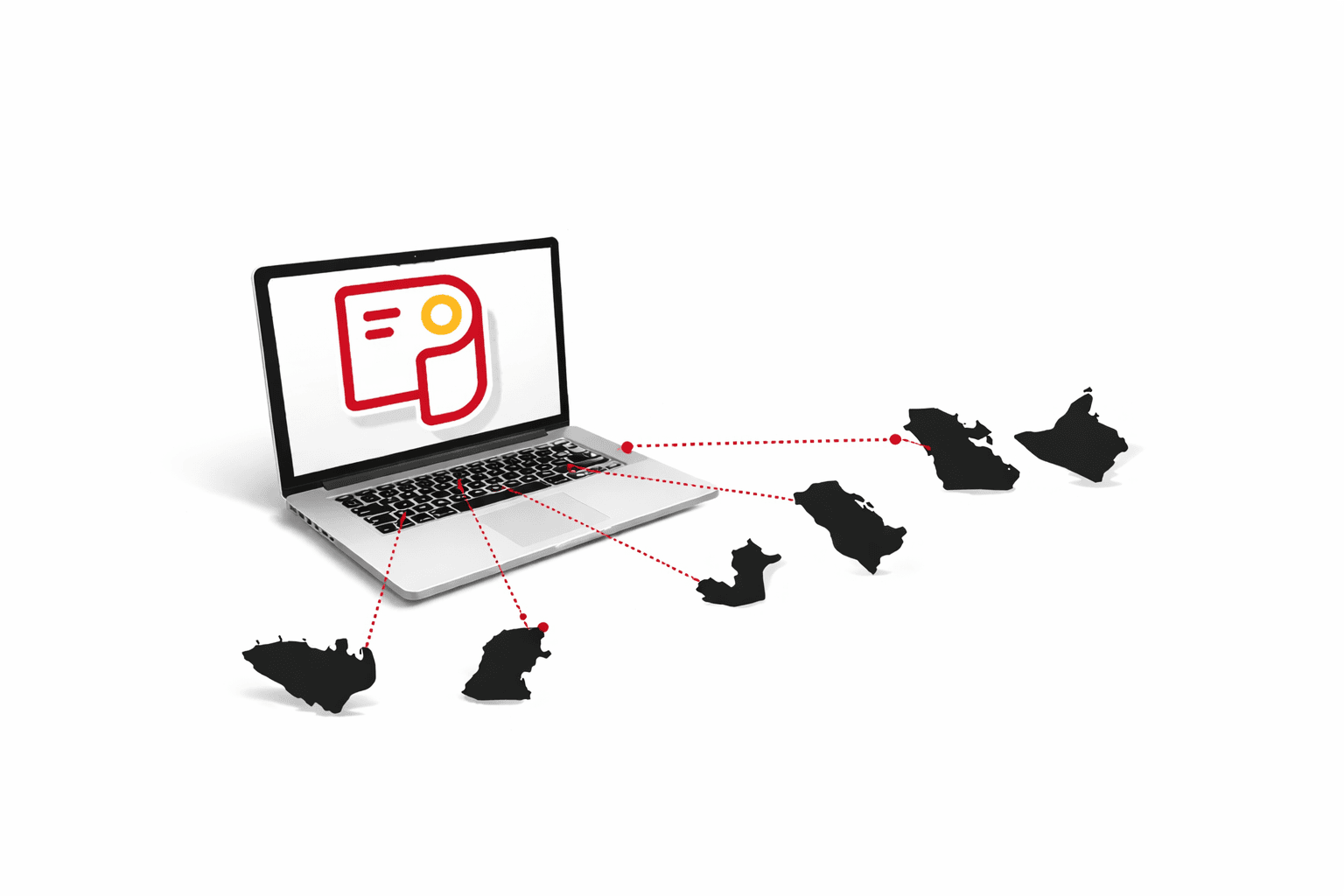
Managing payroll across multiple GCC countries has long been a challenge for growing businesses. Different labour laws, country-specific compliance requirements, and disconnected payroll processes often force organisations to manage each country separately.
As companies expand from the UAE and Saudi Arabia into Bahrain, Qatar, Oman, and Kuwait, this fragmented approach quickly becomes difficult to sustain.
Today, businesses are increasingly moving towards a single, structured approach to managing payroll across the GCC reducing complexity while still respecting country-level requirements.
The Reality of Multi-Country Payroll in the GCC
Each GCC country comes with its own payroll rules:
Local labour laws and statutory deductions
Different salary components and allowances
Country-specific compliance and reporting norms
When payroll is handled independently for each location, organisations often face:
Multiple payroll processes running in parallel
Manual consolidation of payroll data
Higher dependency on individuals or local workarounds
Increased risk of errors and delays
What starts as a manageable setup quickly becomes an operational burden as the organisation grows.
Why a Unified Payroll Structure Makes Sense
A unified payroll structure does not mean treating all countries the same. Instead, it means handling country-specific rules within a consistent operational framework.
With a structured approach, businesses can:
Maintain consistent payroll workflows across countries
Address local compliance requirements without duplication
Reduce manual effort and reconciliation work
Gain better visibility at a regional management level
Payroll becomes easier to manage — not because it is simplified incorrectly, but because it is structured correctly.
Consistency Across Regions, Compliance at the Local Level
One of the key benefits of a well-designed regional payroll setup is balance.
It allows organisations to:
Follow a common payroll cycle and approval process
Apply country-specific rules where required
Offer a consistent employee experience across locations
Generate consolidated views while staying compliant locally
This balance is essential for businesses operating across multiple GCC markets.
Reducing Complexity as the Business Scales
As organisations expand, operational complexity should not grow at the same pace.
A structured, region-wide payroll setup helps:
Reduce manual interventions month after month
Simplify onboarding and offboarding across countries
Minimise dependency on multiple disconnected systems
Ensure payroll runs on time, every time
For leadership teams, this creates confidence that payroll will scale smoothly as the business expands into new markets.
Implementing Payroll Systems That Scale
From our experience working with multi-country organisations, the key is not just choosing a payroll tool, but implementing payroll as a system.
That includes:
Defining clear payroll workflows
Aligning payroll with HR and finance processes
Building consistency without ignoring local rules
Designing for scale from day one
When payroll is implemented this way, it stops being a monthly challenge and becomes a stable operational function.
Looking Ahead
Managing payroll across the GCC no longer needs to feel like managing six separate problems. With the right structure and systems in place, organisations can handle multi-country payroll in a far more controlled and predictable way.
Let’s implement systems that scale across regions — not add complexity.